
Case Study / Financial Services
Building a Unified
Global Platform for J.P. Morgan's Private Banking Services
J.P. Morgan Global Private Bank operates across dozens of markets, serving some of the world's most sophisticated financial clients. When GPB partnered with Bounteous to launch a new multi-site, regionalized digital platform, the core problem wasn't design — it was organizational: two disconnected persona frameworks, fragmented regional strategies, and a site architecture that no longer reflected how clients actually engaged with the bank. I led the UX strategy, driving alignment across global stakeholders and building the research and design foundation for a platform that could serve a unified global audience without sacrificing regional relevance.
across diverse financial backgrounds
consolidated into one global model
cross-functional discovery workshops
Strategic Challenge
GPB's digital presence had grown organically across markets, and it showed. The U.S. and international teams each maintained their own persona frameworks, content strategies, and assumptions about what clients needed — with no shared model to guide a unified global platform. The existing site compounded the problem: unclear navigation, inconsistent labeling, and a content hierarchy that buried key services. My mandate was to resolve the organizational fragmentation before touching a single design component, because no amount of visual polish would fix a platform built on competing definitions of who the customer was.
Research Strategy
I designed a multi-method research program to diagnose both the organizational and UX problems with precision before recommending any solution direction. Stakeholder alignment was built into the research design from the outset — not as a byproduct of the work, but as a deliberate objective.
Method 01
Cross-Regional Stakeholder Workshops
Facilitated sessions with GPB teams across multiple global regions. Structured to surface where U.S. and international assumptions diverged — and to build the organizational trust required to resolve them through a shared framework. Alignment was an explicit deliverable, not a byproduct.
Method 02
Tree Testing — Optimal Workshop
Designed and executed a navigation study with 43 recruited participants (33 completed), representing investable assets from $150K–$500K. Validated proposed IA structures against real user mental models before any design work began.
Method 03
UX & Content Audit
Conducted a parallel audit of the existing site structure and content with the content strategy team. Identified three systemic failures: no clearly defined user path, navigation labels misaligned with client language, and a page hierarchy that suppressed high-value services.
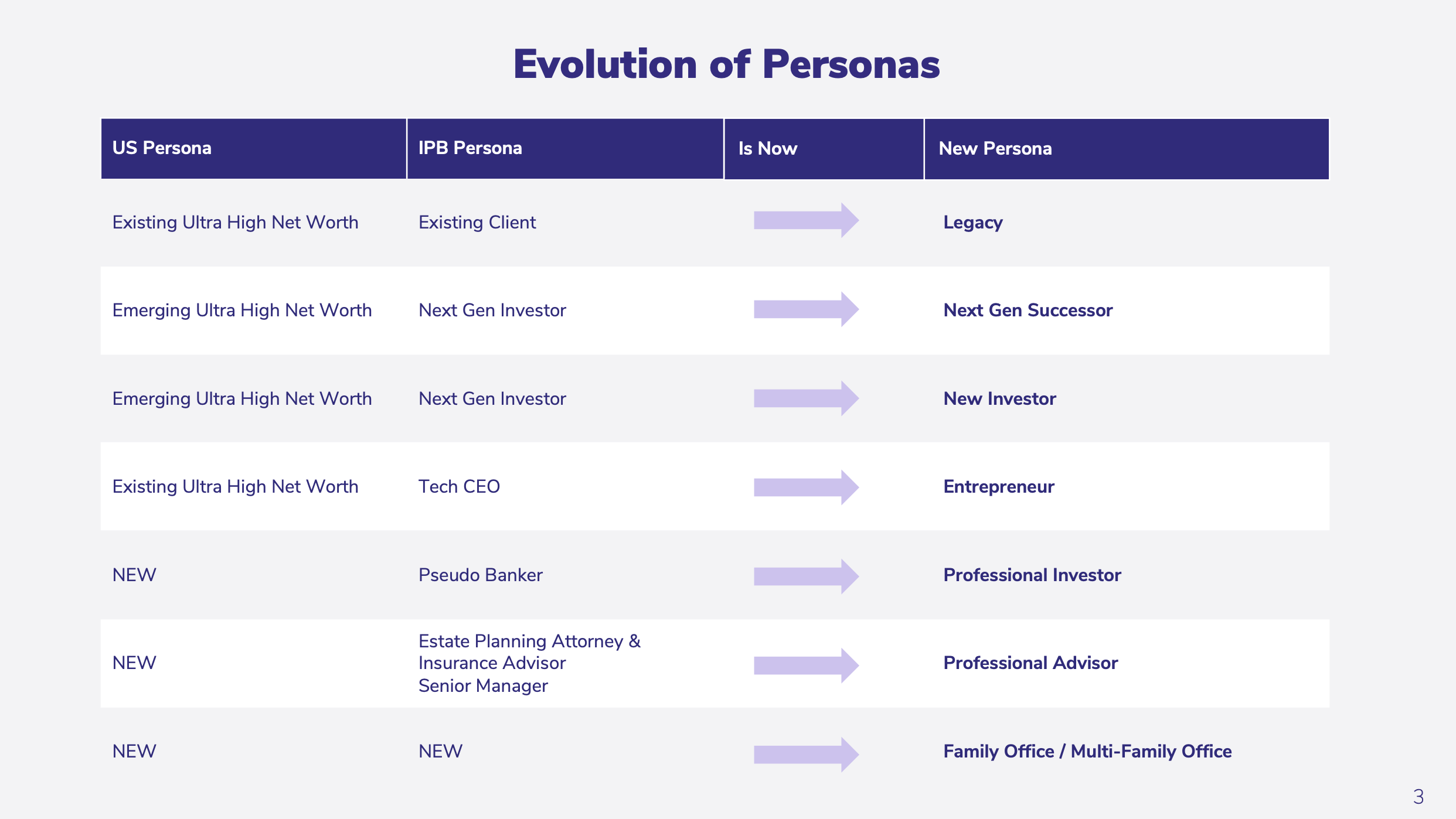
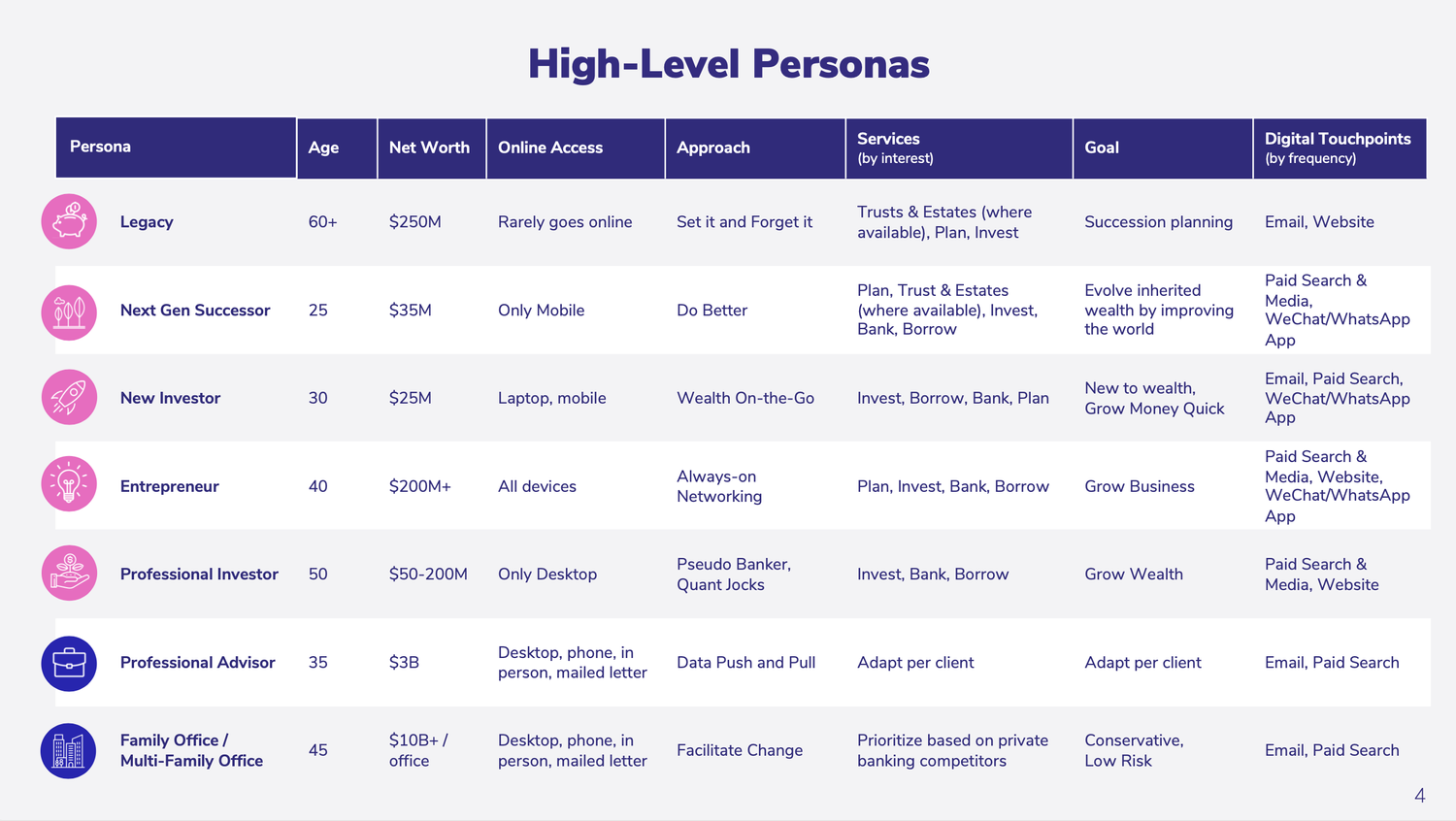
Unifying the Global Persona Framework
The first strategic decision I made was to treat the persona consolidation as a change management challenge, not a research exercise. Two regional teams had built separate models over years — merging them required building organizational trust, and synthesizing data was the means to that end, not the goal. I facilitated cross-regional workshops to identify the behavioral and motivational patterns that held true across all markets, and separate them from surface-level cultural differences that required localized content, not separate platforms.
Usability Research & Key Findings
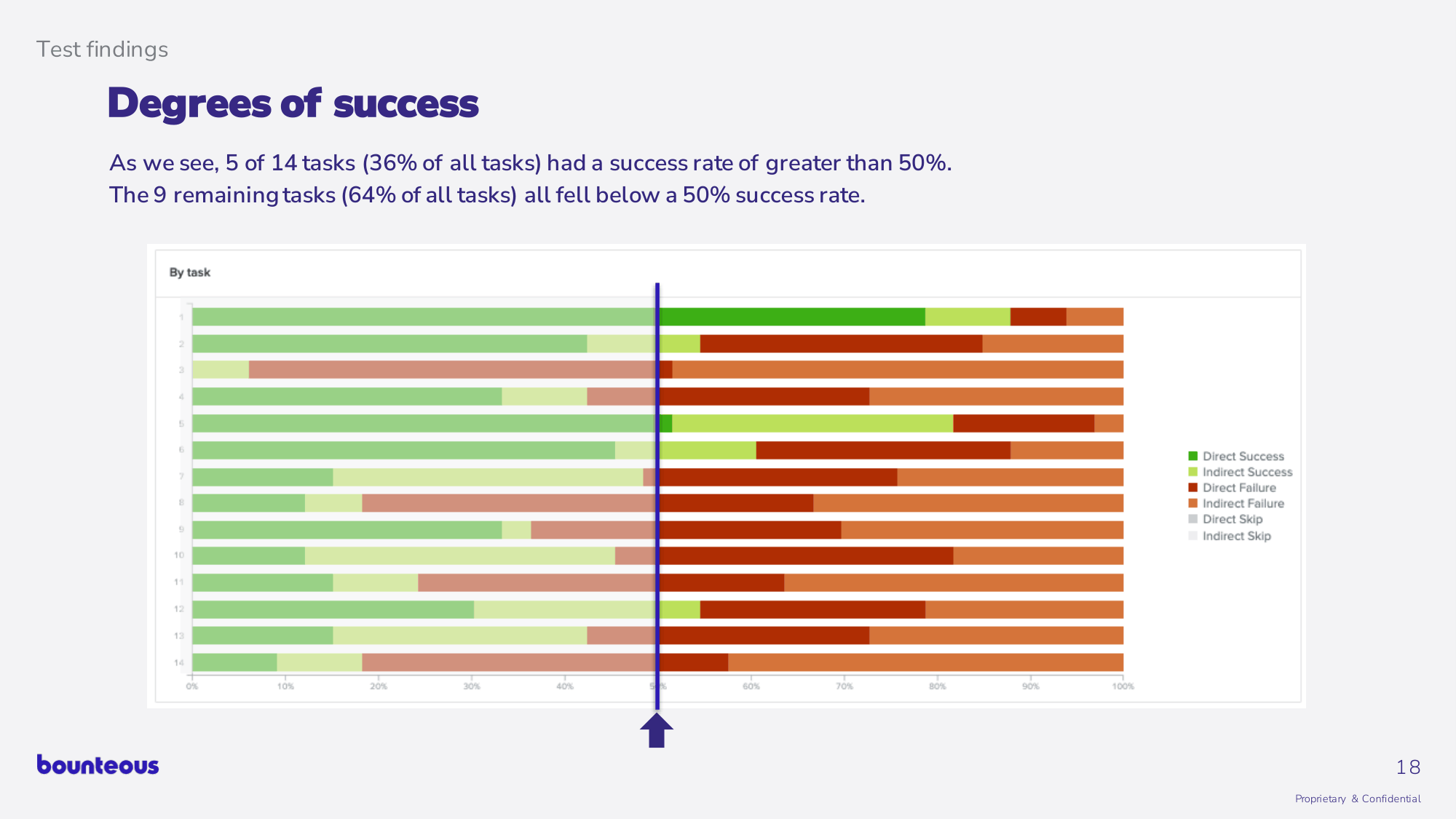
Before committing to a new information architecture, I ensured every structural recommendation was grounded in evidence, not assumption. Tree testing with 43 participants surfaced a finding that reframed how we presented the problem to GPB's stakeholders — and changed the nature of the solution.
"Users were consistently confident in their navigation choices — and consistently wrong. That distinction mattered: this wasn't a user education problem. It was an information architecture problem GPB owned."
The tree test revealed that GPB's navigation labels were misaligned with how clients thought about their financial needs. Users were applying their own mental models — logical ones — and arriving at the wrong content. High confidence combined with low accuracy is a specific diagnostic signal: it means the labels are the problem, not the users' familiarity with the category. Framing this correctly for GPB stakeholders was critical. It shifted the conversation from "clients don't understand our services" to "our architecture doesn't reflect how clients think about their needs" — a reframe that unlocked the mandate for significant structural change.
- Navigation labels needed to reflect client language, not GPB's internal product taxonomy
- Content organization needed to mirror how clients think about financial goals, not how GPB structures its service lines
- Visual hierarchy cues were needed to help clients orient within complex service areas without prior knowledge of GPB's offerings
- Personalization architecture was required to serve the meaningfully different digital behaviors of clients ranging from mobile-only next-gen inheritors to desktop-only professional investors
Information Architecture & Platform Design
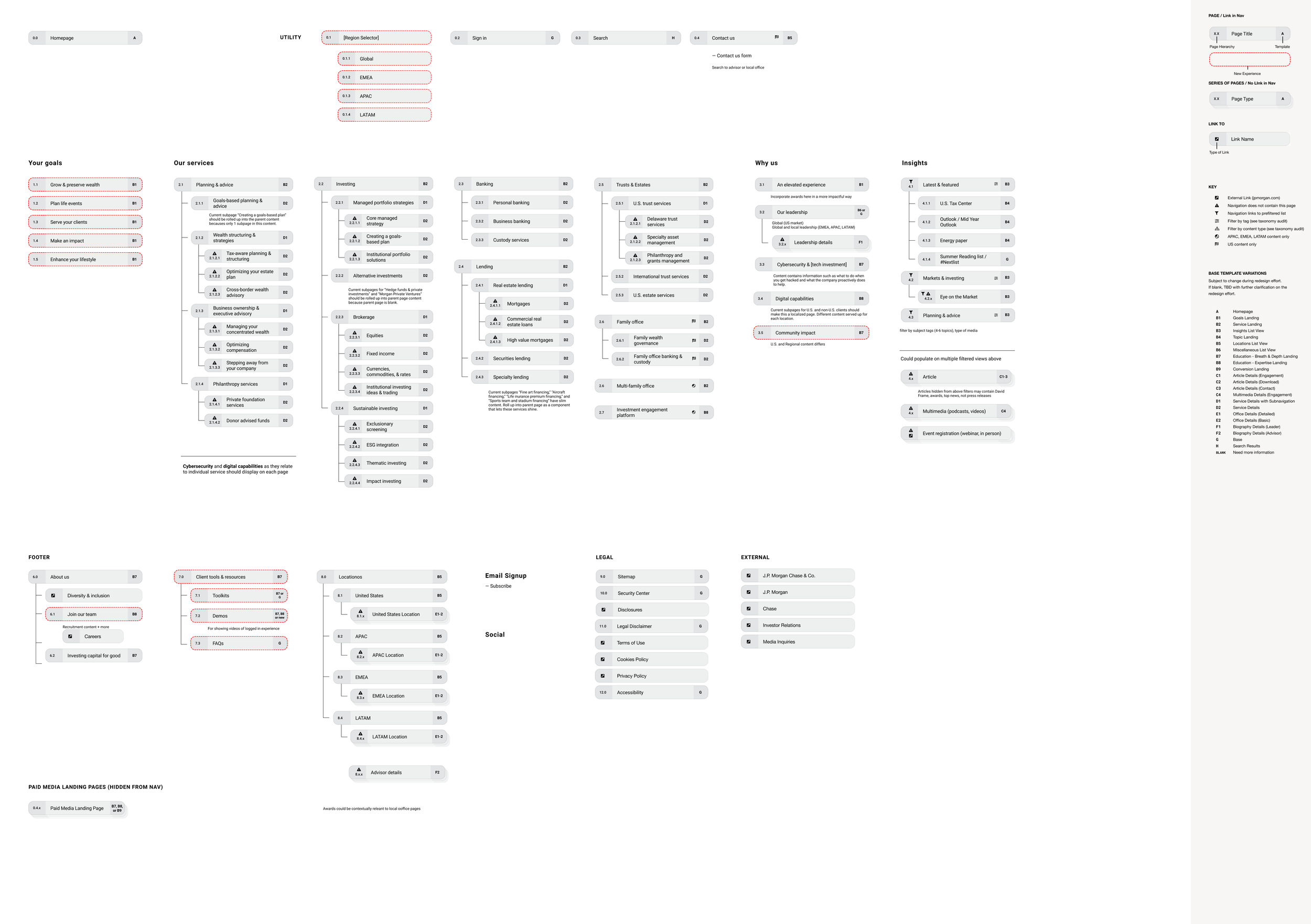
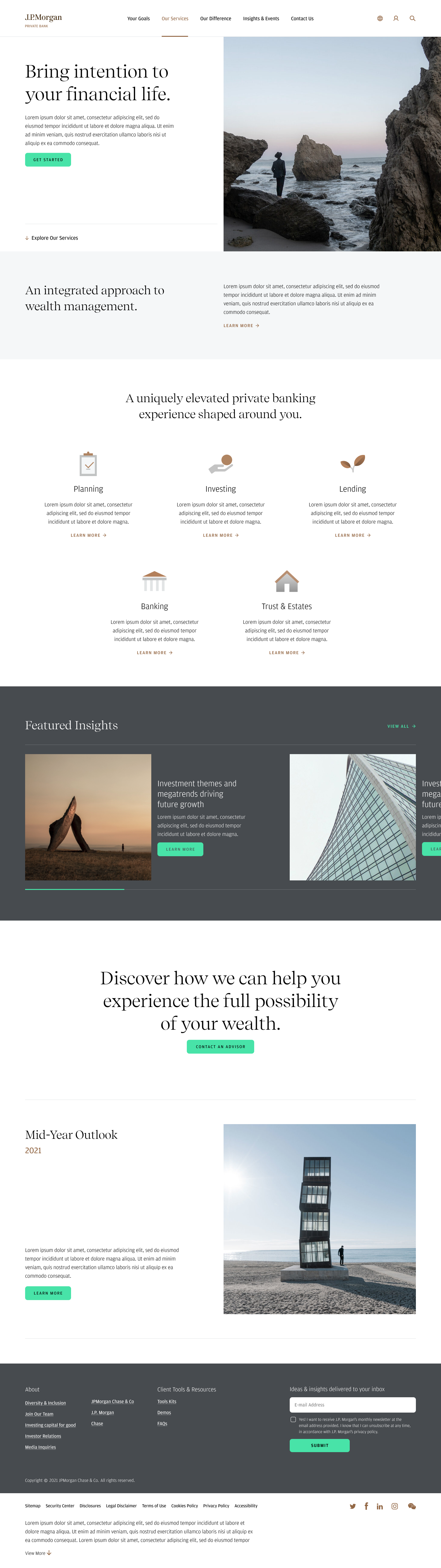
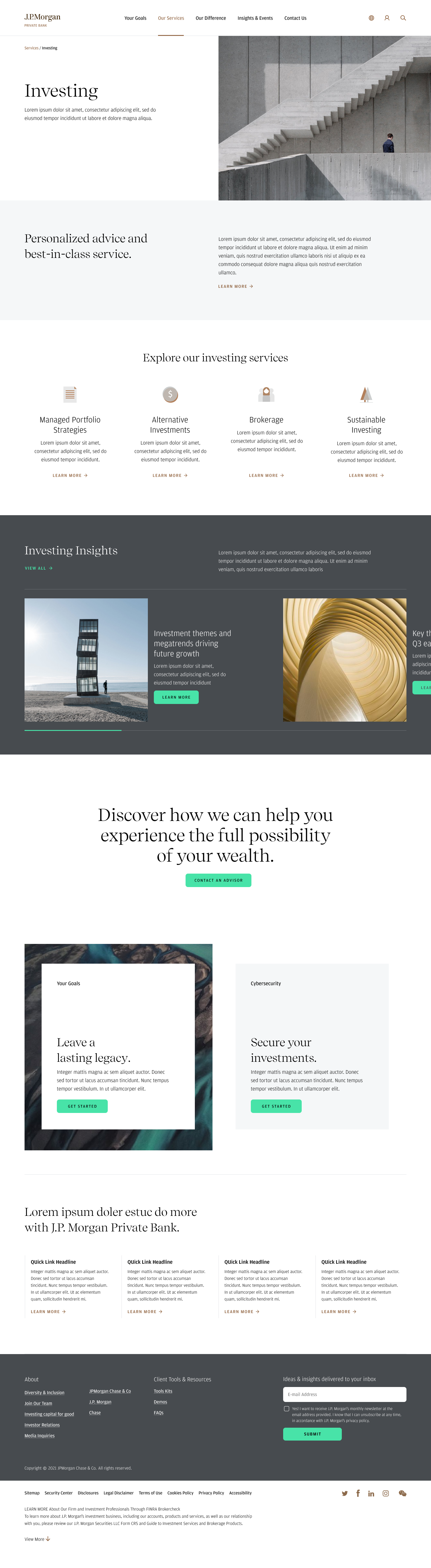
The research phase gave us the mandate and the evidence for significant structural change. I led the IA redesign, building a content hierarchy that reflected the unified persona framework rather than GPB's internal org structure — and a design direction that matched the platform's premium positioning while improving usability across every client segment.
Client-Language Navigation
Rebuilt the navigation taxonomy around how clients describe their financial goals — grow wealth, plan for succession, manage a business — rather than GPB's internal service category structure. Eliminated the label-content misalignment identified in tree testing.
Personalization Architecture
Defined the framework for regionalized and audience-specific content delivery. The platform needed to feel locally relevant to a Next Gen Successor in APAC and a Legacy client in the U.S. simultaneously — without requiring separate site instances for each market.
Premium Design Direction
Elevated the visual language to match GPB's positioning as one of the world's leading private banks, while deliberately reducing imagery dependency to improve load performance across international markets. Design sophistication through restraint, not decoration.
Flexible Hero Architecture
Designed modular hero sections that could be personalized by region or audience segment, allowing GPB to deliver market-relevant messaging at the highest-visibility point of entry without maintaining separate homepage instances per market.
WCAG 2.1 Accessibility
Accessibility treated as a design constraint from the outset, not a compliance checklist. Particularly significant for a global platform serving clients across varying regulatory environments and device contexts.
Performance Optimization
Site performance and load times were a top priority across all markets — particularly relevant for international clients in regions with variable connectivity. Less reliance on heavy imagery was a strategic design decision that served both performance and design quality simultaneously.
Outcomes & Impact
The discovery and strategy phase delivered four durable assets that became the foundation for GPB's global digital platform — and established a shared organizational model for how design and content decisions would be made going forward.
Unified Global Persona Framework
A single source of truth replacing two fragmented regional models — adopted across U.S. and international teams, directly informing content strategy, platform architecture, and personalization decisions across all markets.
Evidence-Based Information Architecture
A new site structure grounded in usability research — replacing label hierarchies that had been misaligned with client mental models, and giving GPB a navigation system that reflected how clients actually think about their financial goals.
Global Stakeholder Alignment
Cross-regional teams arrived at shared design direction through structured workshops — resolving organizational fragmentation that had persisted across prior site iterations and giving GPB a unified strategic foundation for the platform build.
Accessible, Scalable Platform Foundation
A design system and content model built for WCAG compliance and regional flexibility — giving GPB the infrastructure to extend the platform to new markets and service areas without rebuilding from scratch.